People & Purpose Theatre
Social Impact Measurement – Where Business Economic and Social Impact Coincides
Day 1 : 13:10 – 14:00
Why is it important for us to draw the measurement of social impact back to the common denominator of economics? Join our panellist and practitioners of social impact measurement for a unique window into their experience, covering their success, challenges, learning, and more.
Session Discussion Points
- What are the key factors to social impact measurement? What were the challenges they faced on embarking on this journey?
Speakers
Moderator
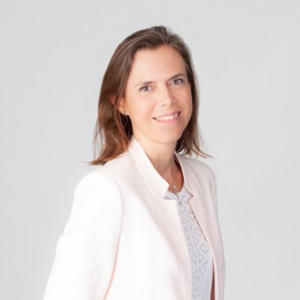
Virginia Wilson
Senior Executive Advisor
Virginia Wilson
Senior Executive Advisor
Leading private and social enterprises for over 25 years in multilateral, culturally diverse environments, Virginia is passionate about bringing to life measurable impact and creating new value in our society.
Virginia has a demonstrated track record of securing strategic partnerships between corporations, governments, and non-profits to deliver on social impact projects. She started her career in telecommunications, building satellites, and the distribution of free-to-air television across 60 countries in Asia.
Virginia focuses on education, believing that investing in people is the key driver for impactful change. Bringing together diversity and crossing cultural divides is a pathway to create Shared Value in our world, aligning purpose with profit.
After serving on the board of several educational institutions including ESF and the VTC, Virginia is now a member of the Board of Directors of the Adecco Group Foundation in Switzerland a social innovation lab, incubating and accelerating new solutions in the world of work.

Johnny Kong
Chief Operating Officer
Johnny Kong
Chief Operating Officer
Johnny joined the ICTI Ethical Toy Program as the General Manager of Asia Operations in February 2017. Promoted to the Chief Operating Officer in 2022, he is responsible for overseeing the operations of the organization globally.
Before joining the Ethical Toy Program, Johnny worked at Decolav, a US-based design house of high-quality furniture and bathroom products, where he was the Managing Director of Asia Operations. Prior to this, he was the Senior Sourcing Manager at Lowe’s Global Sourcing Hong Kong Ltd. Johnny started his career working for Johnson Electric for five years managing the production for Home Appliances products. He brings a wealth of leadership and operational management experience to the Ethical Toy Program team, gained from his 22 years working in the international manufacturing industry .
He received a Bachelor of Engineering at the University of Victoria in Canada and a Master of Science in Engineering Management at the City University of Hong Kong.
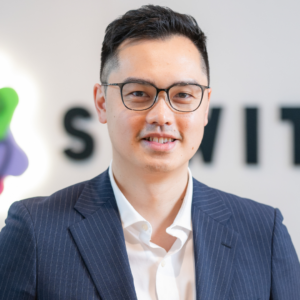
Garrick Lau
Head of Sustainability and Shared Value, SEWIT Department
Nan Fung Group
Garrick Lau
Nan Fung Group
Head of Sustainability and Shared Value, SEWIT Department
Garrick specialises in driving organisational change that creates business value alongside positive impact through the Creating Shared Value (CSV) strategy.
His 20+ years of experience and expertise cover real estate and hospitality asset management, organisational development, corporate sustainability, impact measurement and management, social intrapreneurship, NGO management, charitable fundraising, and grant management.
In his current role with a leading private conglomerate in Hong Kong, Garrick leads efforts to embed sustainability and shared value principles across the group’s operations and value chain through a Sustainability-as-a-Service approach. A core responsibility of his team is to implement new solutions that support commercial tenants in achieving their sustainability goals through green and social leases, to continuously enhancing the company’s competitiveness. In addition, his team oversees voluntary reporting related to decarbonisation and climate, nature, governance, and green financing.
For the wider industries, he advocates for the implementation of impact measurement, through thought leadership and consultancy engagement, to enable the continuous improvement of the effectiveness of corporate impact funding with transparency and accountability. These efforts extend beyond the local market and have received unprecedented recognition from global platforms, including the Shared Value Award and Social Value Award.
In addition to his professional role, Garrick serves on a voluntary basis as Chairperson of the Advisory Committee on Graduate Employment at The Hang Seng University of Hong Kong, Vice President of CareER (a charity supporting employability for students with special needs), and a Board Member of Junior Achievement Hong Kong (a charity promoting youth employability).
Speaking at 2026 sessions:
Day 1
Advancing Green Behaviours in Green Buildings: Tenant Engagement as the Bridge to Real Impact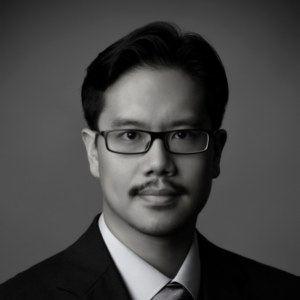
Vincent Mok
Managing Partner
Hartley McMaster
Vincent Mok
Hartley McMaster
Managing Partner
Vincent Mok leads Hartley McMaster’s Asia-Pacific practice and co-chairs the Energy & Utilities Committee of the Artificial Intelligence Association of Hong Kong. At Hartley McMaster he directs the firm’s decision-science and AI consulting, leading teams that quantify capital allocation, optimization and risk for asset-intensive operators, building on the firm’s 23 years of work in water, energy, aviation and transport. His current focus is the decision layer above operations: how operators turn data into optimized and defensible capital and maintenance portfolios, and whether climate and resilience risk is actually priced into capital plans. He is the creator of SAM-DD, Hartley McMaster’s strategic asset management due diligence methodology for infrastructure investors.
My Sustainability Goals for 2026:
- To see ESG and climate risk move from disclosure to decision: quantified, monetized, and embedded in the capital-allocation frameworks of asset-intensive operators and their investors. A risk that appears in a sustainability report but not in the capital plan is not yet being managed, and in 2026 the gap between the two is still wide.
- To see APAC utilities regulators create the conditions for AI-supported capital decision-making, because the energy transition is above all a capital-allocation challenge. Grid reinforcement, renewables integration, and climate adaptation all compete for constrained capital, and AI-supported decision-making gets measurably more decarbonization and resilience from every dollar invested. Regulatory frameworks that recognize data quality and decision auditability would accelerate that shift; today they lag well behind what the technology makes possible.
Supported by
Shared Value Initiative Hong Kong
Shared Value Initiative Hong Kong (SVIHK) is a non-profit organisation driving the purpose-led business movement in Hong Kong and China. We are funded by leading companies to accelerate shared value creation by establishing long-lasting and profitable business models while addressing unmet societal needs. Our dedicated programmes and vivid ecosystem bring unlikely partnerships that simultaneously create economic and social value.